
Slope and drainage
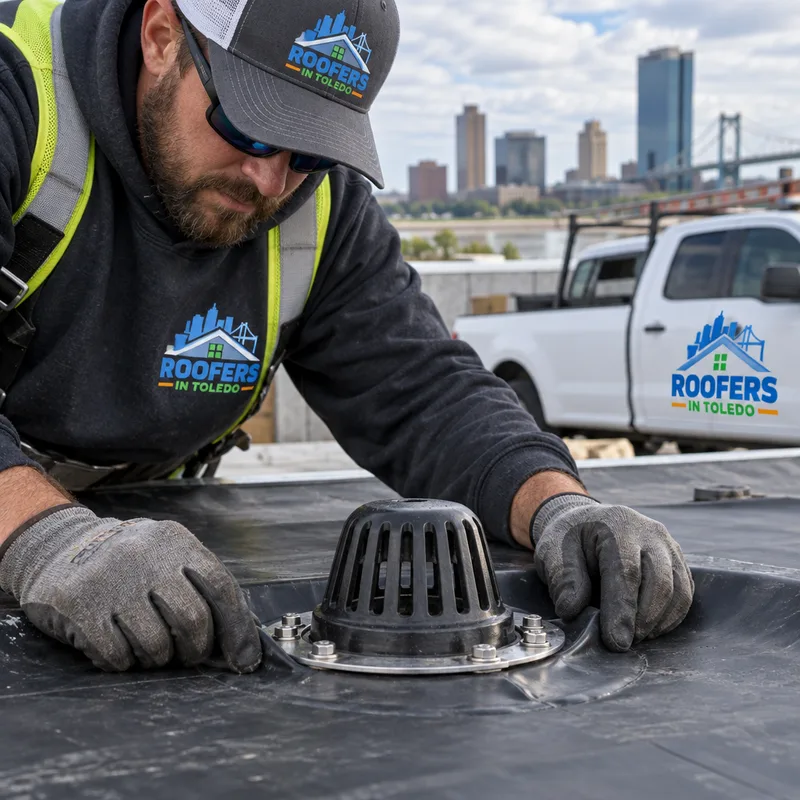
Where water goes matters. Expect questions about ponding areas, drain locations, scuppers, and whether the roof has tapered insulation or crickets to move water.
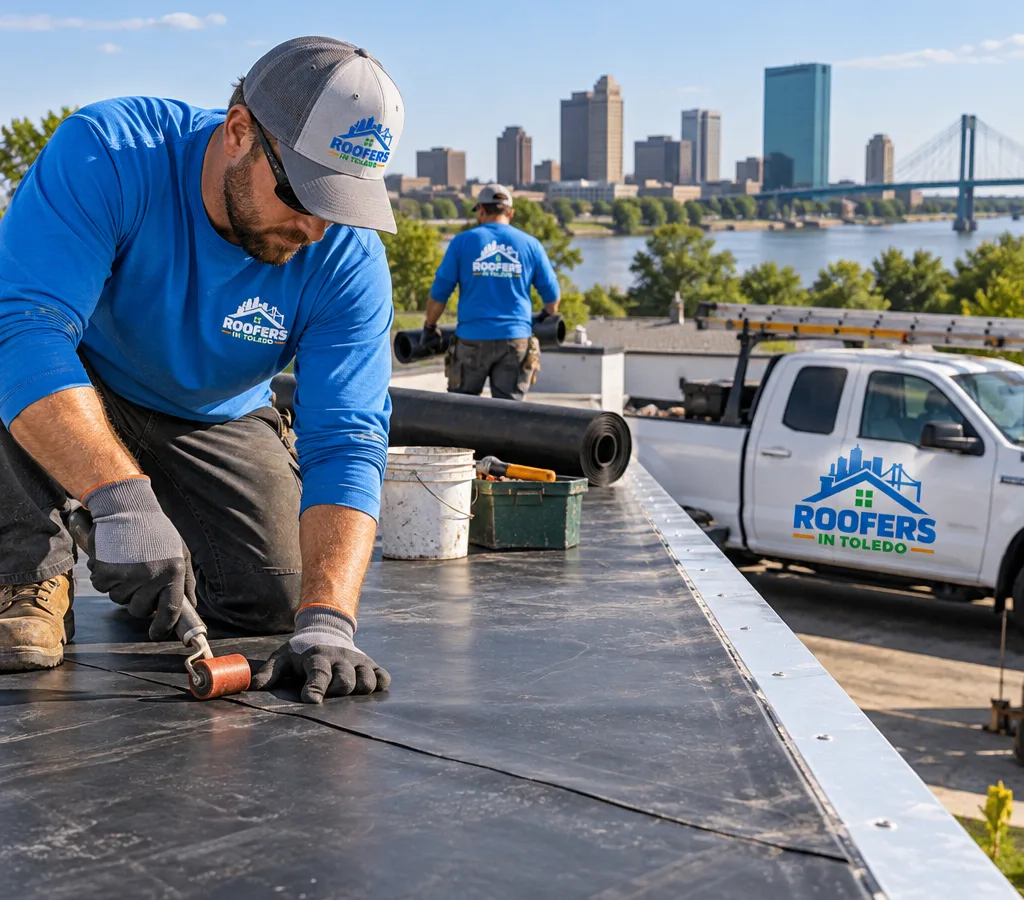
Rubber roofing in Toledo, Ohio
Describe your low-slope roof once and we'll connect you with a local contractor in the Toledo area who handles rubber roofing.
CALL NOW: (567) 666-7617Low-slope roof systems
A rubber roof—most commonly EPDM—is a membrane system used on low-slope and flat roofs where shingles are a poor fit. In Toledo, these roofs show up on porch roofs, additions, garages, apartment buildings, and many commercial properties.
If you searched for rubber roof Toledo, you're probably dealing with one of three situations:
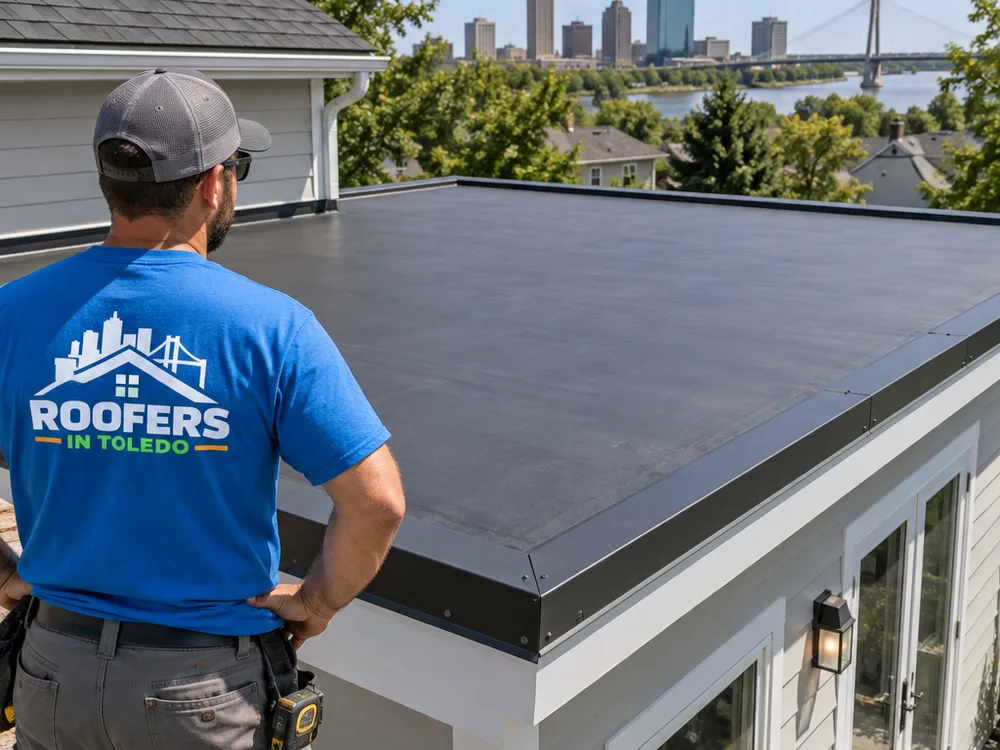
Rubber roofing is less about the field of the roof and more about the details. The contractor you speak with will focus on transitions and penetrations: parapet walls, drip edges, pipe boots, skylights, curbs, and any place the membrane changes direction. On many Toledo-area buildings, the toughest spots are where a flat section ties into brick, fascia, or older trim that has moved over time.
Roofers in Toledo is a referral service. We answer your call, take the basics, and connect you with a local contractor who can evaluate the roof and explain the next steps. For broader roofing in Toledo, the connected contractor can also talk through how rubber compares with other low-slope options for your specific building and drainage layout.
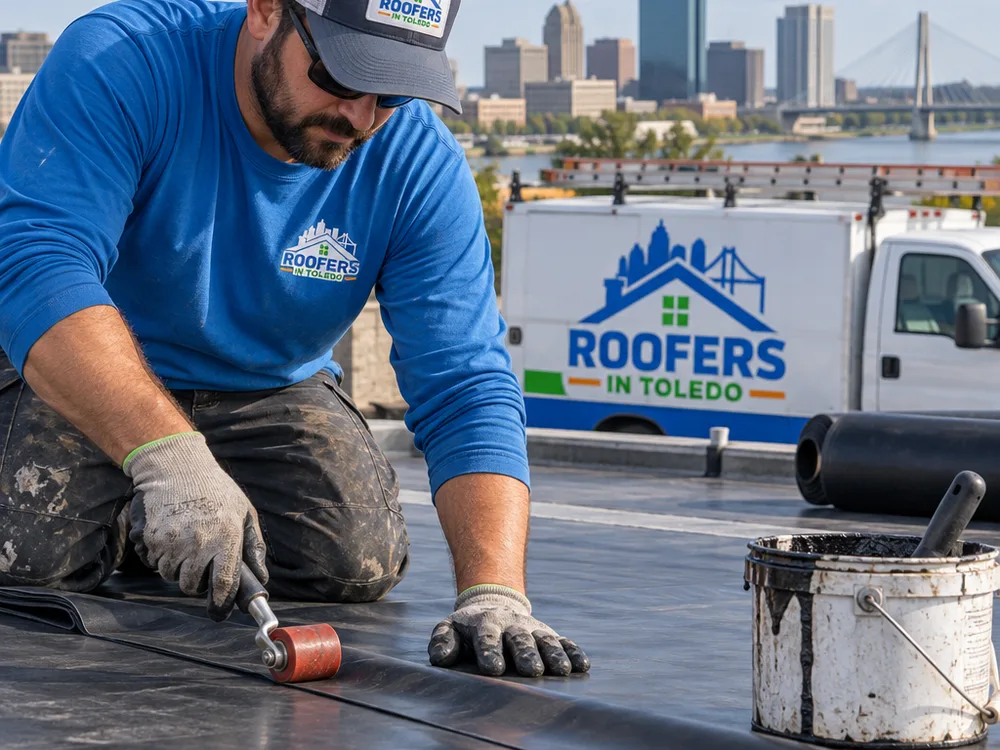
Evaluation priorities
Where water goes matters. Expect questions about ponding areas, drain locations, scuppers, and whether the roof has tapered insulation or crickets to move water.
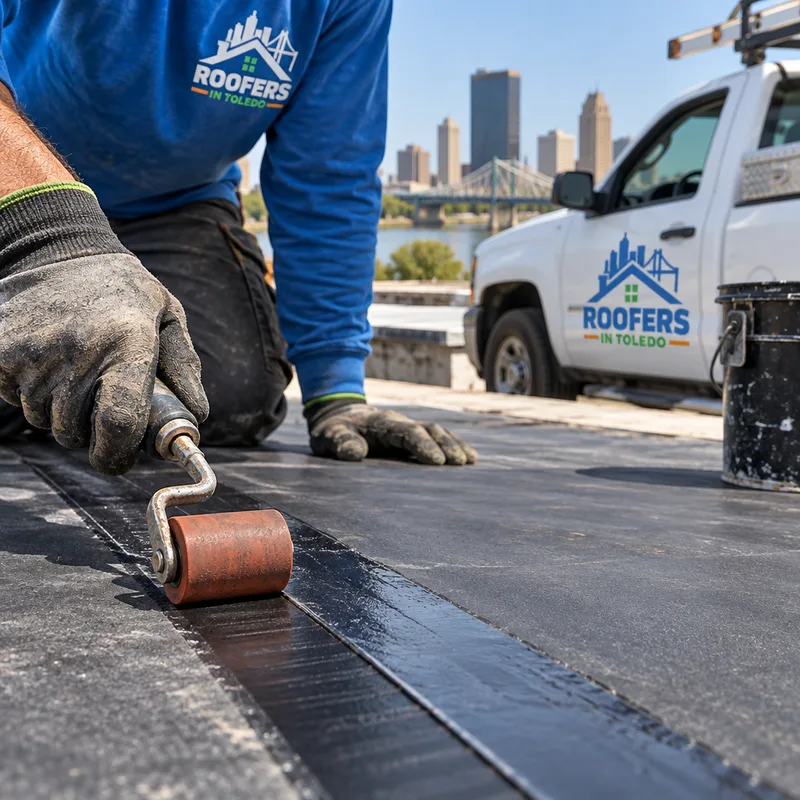
Most EPDM issues start at seams and edges. The contractor will check seam condition, tape or splice integrity, and how the membrane is terminated at walls and edges.
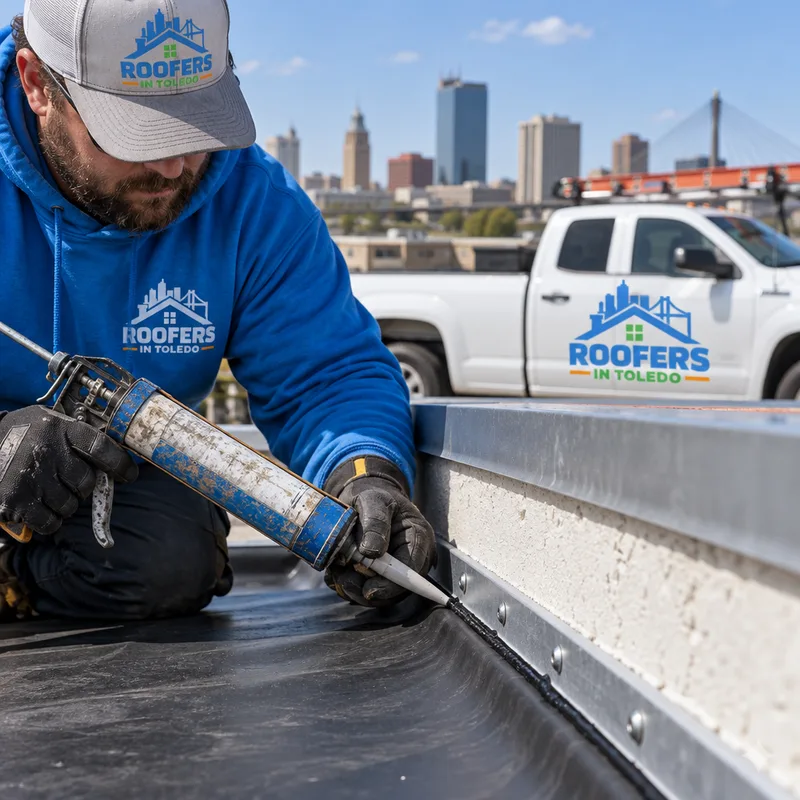
Pipes, skylights, HVAC curbs, and wall transitions need the right flashing and compatible sealants. Small failures at these points can look like mystery leaks inside.
Soft spots can mean wet insulation or deteriorated decking. A replacement plan often depends on what's found once the roof is opened.
Multiple patch materials can create incompatibilities. The contractor may recommend removing poorly bonded patches instead of layering more material over them.
From evaluation to walkthrough
You describe the roof type, building use—home, garage, or commercial—and the problem, such as a leak, aging membrane, blow-off, or seam separation. We use that to connect you with a local contractor who handles rubber roofing.
The contractor checks seams, flashing, edges, and drainage points, then looks for signs of trapped moisture—soft decking, bubbling, or staining—that can change the scope.
You'll hear what can realistically be repaired versus what is likely to keep leaking, plus any upgrades that reduce repeat problems, including better terminations, revised edge metal, or improved drainage details.
Low-slope jobs often include protecting landscaping and walls, removing old membrane when required, installing insulation or cover board, adhering or fastening EPDM, then completing all flashing and edge details.
Before you wrap up, ask what maintenance is recommended for your roof type—keeping drains clear, checking terminations, and watching for punctures after storms—and what warranty terms apply to materials and workmanship.
EPDM seams, edges, and drainage
Common questions
In most cases, yes: EPDM is the rubber membrane many people mean when they say “rubber roof.” A contractor can confirm what you have by looking at the membrane, seams, and flashing details because some low-slope roofs are TPO, PVC, modified bitumen, or built-up roofing and the repair approach changes with the material.
If leaks are coming from a specific seam, flashing, or puncture and the surrounding membrane is still in good shape, a targeted repair may be an option. If there are widespread seam issues, shrinking, cracking, recurring leaks in different areas, or signs of trapped moisture under the membrane, the contractor may recommend replacement so the underlying deck and insulation can be addressed.
Have the building type, approximate roof size, roof access notes, and where you see symptoms, such as the stain location inside, drip edge, wall intersection, or drain area. If you know whether the roof is fully adhered, mechanically fastened, or ballasted, mention it, but it's normal not to know and let the contractor identify it on site.
Many low-slope leaks start at terminations: edge metal, parapet walls, and transitions where the membrane meets siding, brick, or coping. Movement, wind uplift, aging sealants, and poor attachment details can let water track behind the membrane, so the contractor will focus on how those edges are fastened and flashed.
Sometimes it can, but it depends on what's already there and whether moisture is trapped in the existing layers. The contractor will look for soft spots, saturated insulation, and attachment issues, because covering a wet or unstable substrate can shorten the life of the new system.
Repairs usually involve cleaning, priming, and applying compatible seam tape or a patch with the correct adhesives, then rolling it to bond properly. The materials have to match the existing roof system; mixing incompatible products is a common reason patches fail.
Not automatically, but standing water is a warning sign worth addressing. The contractor may check for clogged drains, low spots, settled insulation, or deck deflection and then recommend the best fix for your roof, which can range from drainage maintenance to re-sloping in problem areas.
Ask what they think is most likely based on your description, what areas they'll inspect first—seams, flashing, drains, and penetrations—and what repair versus replacement paths typically look like for your roof type. If you've had previous repairs, tell them what was done and where so they can zero in on repeating failure points.
One call starts the conversation
Pick up the phone, describe what's happening on your low-slope roof, and Roofers in Toledo will connect you with a local contractor who can inspect it and give you options you can decide on.
CALL NOW: (567) 666-7617Roofers in Toledo serves Toledo, Ohio and surrounding communities within roughly a 10-mile radius, including Sylvania, Maumee, Ottawa Hills, Oregon, Perrysburg, and Rossford.