
One description of the problem
Explain the leak location, roof type (if known), and what changed recently, and we'll use that to connect you with a contractor who handles flat roof repairs.
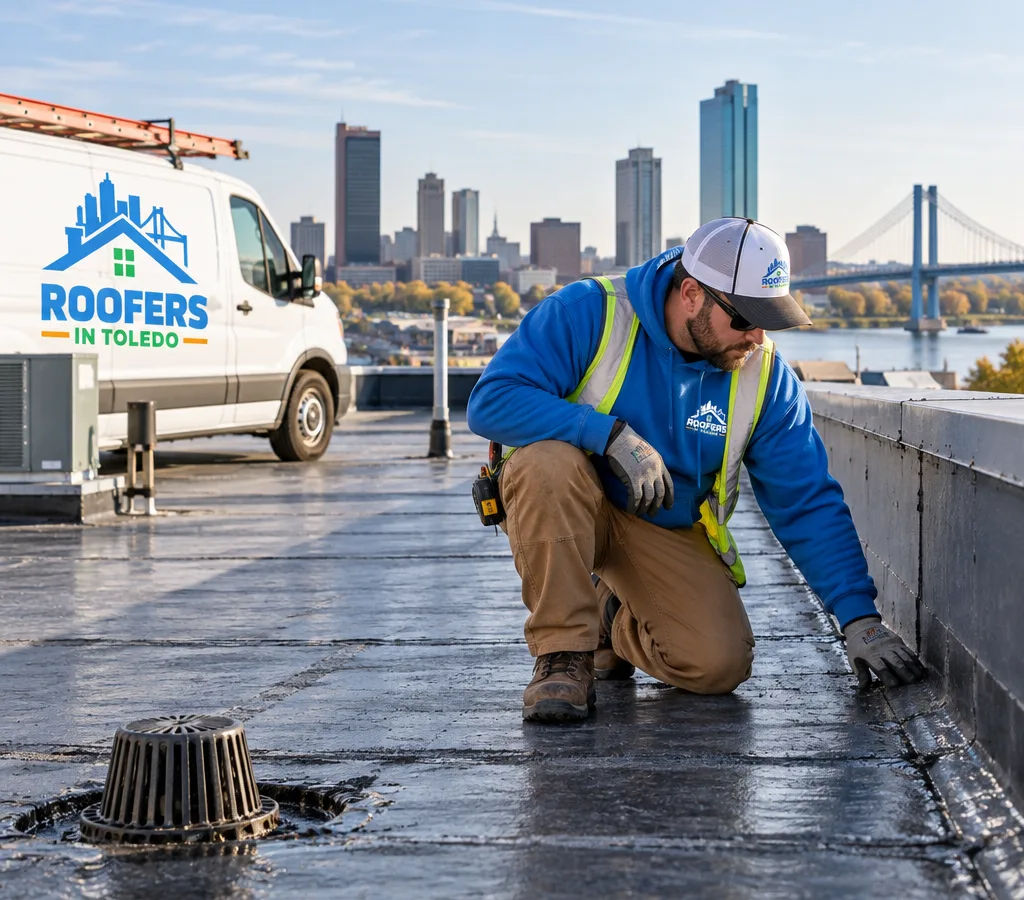
Flat roof repair in Toledo, Ohio
Describe the leak or problem once and we'll connect you with a local contractor who works on flat roofs in the Toledo area.
CALL NOW: (567) 666-7617Find the point of entry
If you're searching for flat roof repair Toledo homeowners can actually act on, the first step is narrowing down how water is getting in. Flat roofs (low-slope roofs) usually leak at details, not in the middle of a wide open field.
A local contractor typically starts by tracing the leak from the inside out, then checking the roof surface for the usual failure points:
Toledo's freeze-thaw cycles matter on flat roofs. Water that sneaks into a seam or around flashing can expand when it freezes, turning a small defect into a bigger opening over time.
If your situation sounds like an immediate leak into the ceiling, mention where it's dripping and what room it's in. If it's a slow stain, mention how long it's been there and whether it shows up after rain or after snow melt. When you call Roofers in Toledo, you describe what you're seeing once and we connect you with a local contractor who can take it from there.
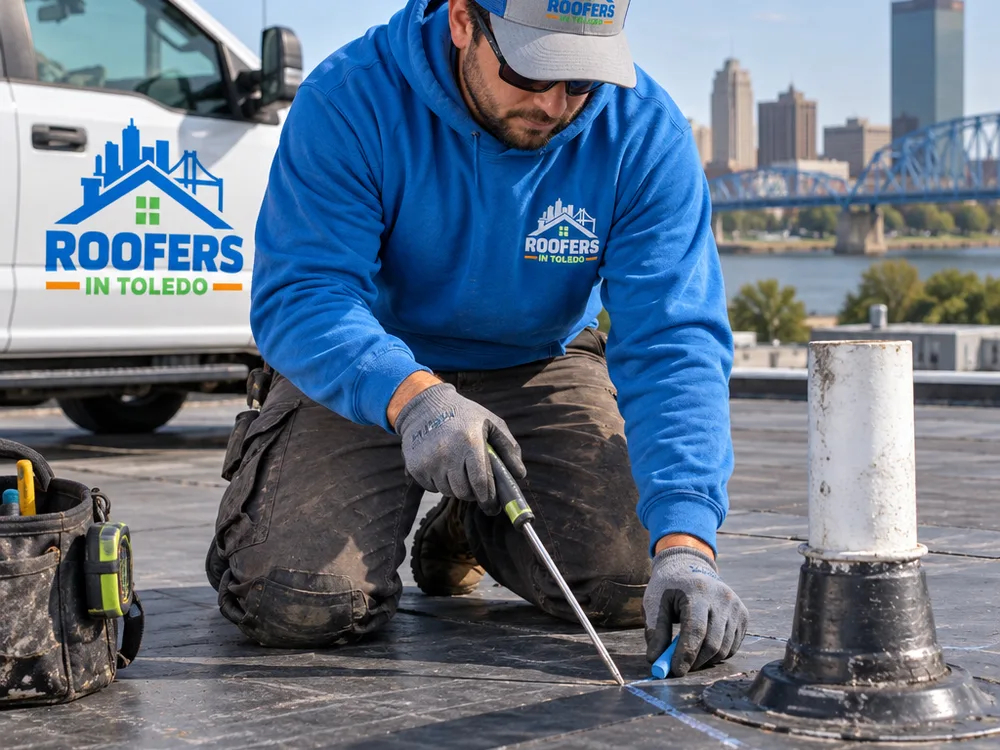
One call helps clarify the repair
Explain the leak location, roof type (if known), and what changed recently, and we'll use that to connect you with a contractor who handles flat roof repairs.
Flat roof work often involves membranes, coatings, drains, and edge details. We focus the connection on contractors who take on low-slope repair jobs.
Low-slope roofs here see wind-driven rain and freeze-thaw. A contractor familiar with the area knows where flat roofs tend to fail and what to check first.
You speak directly with the contractor, ask questions, and decide whether the scope they recommend fits your situation.
Depending on what's found, the contractor may talk through a targeted repair, a localized restoration, or a broader maintenance plan.
From leak report to repair plan
When you call, have the building type (home, garage, addition), approximate roof size, the leak location inside, and any photos you can take safely from the ground.
We connect you with an independent contractor who serves Toledo and can discuss flat roof repair and next steps.
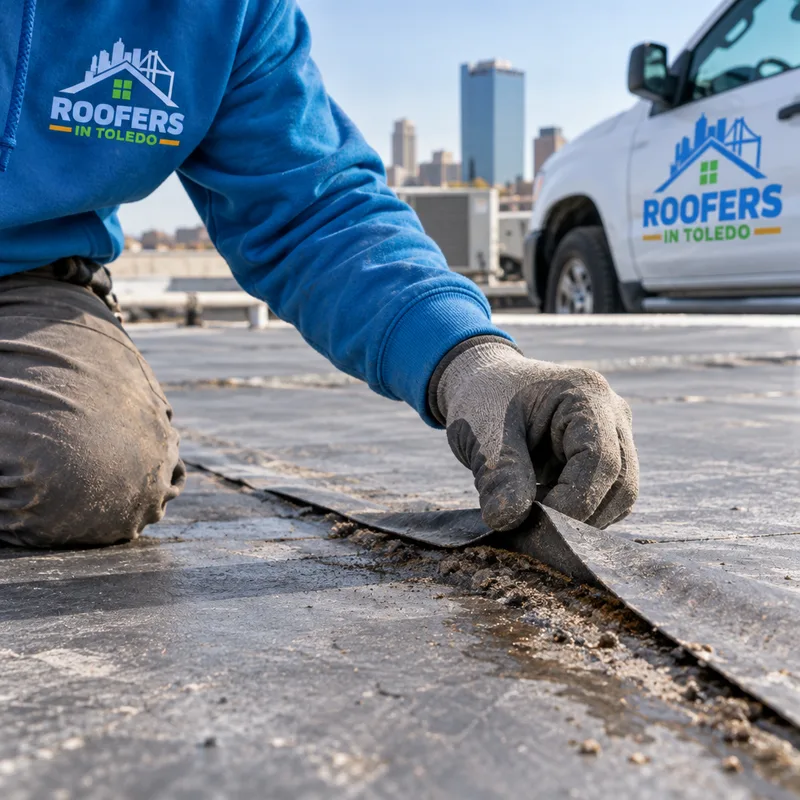
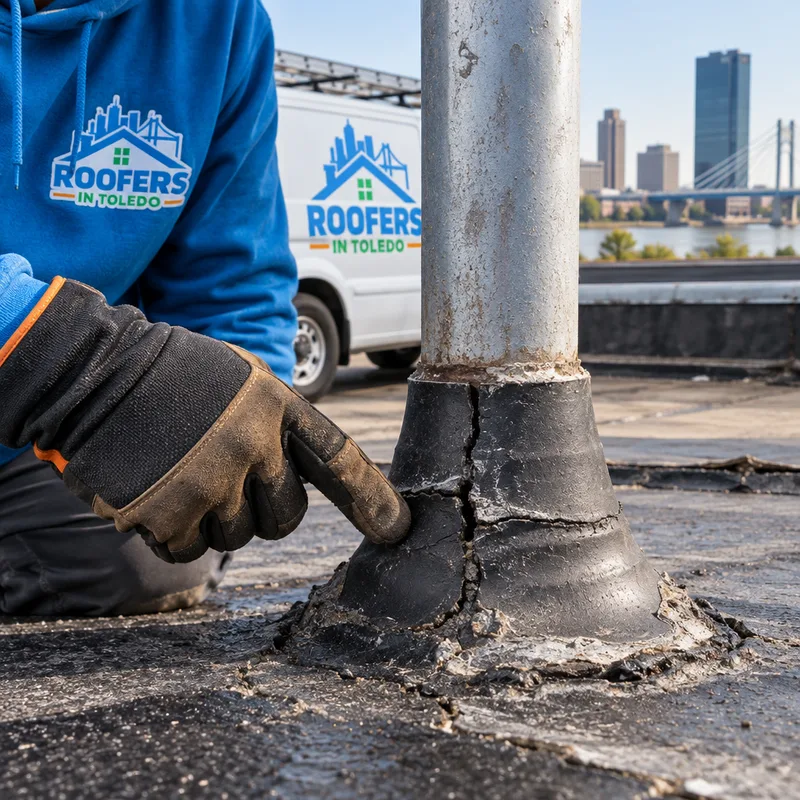
The contractor checks seams, penetrations, drains, and transitions, then looks for moisture paths so the repair targets the actual entry point.
A good plan matches the existing system (EPDM, TPO, modified bitumen, built-up) and addresses what caused the failure, not only the visible damage.
After repairs, the contractor may recommend a controlled hose test or waiting for the next rain to confirm the leak is resolved, depending on roof conditions.
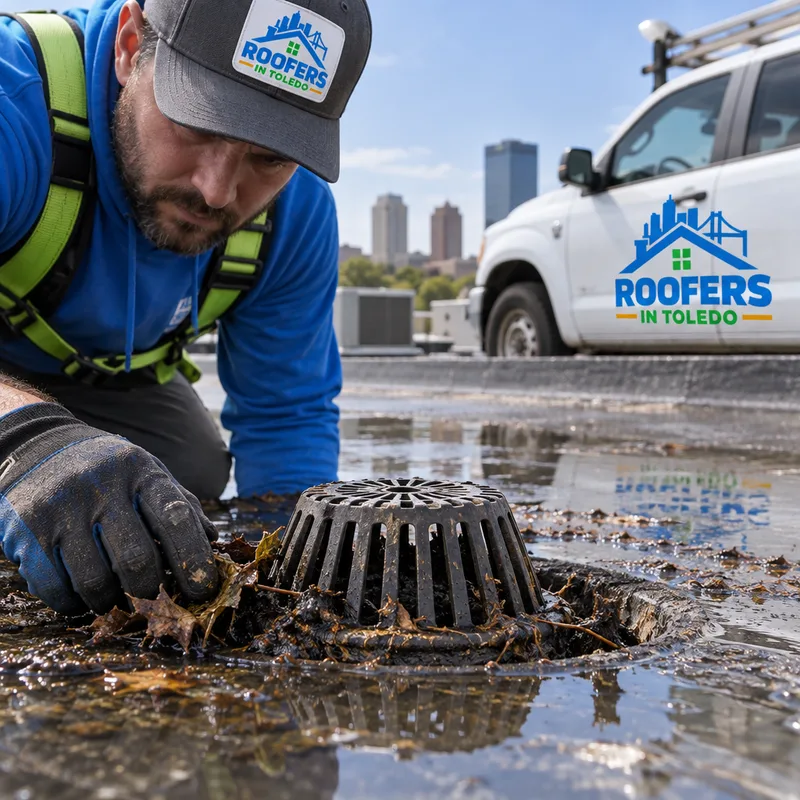
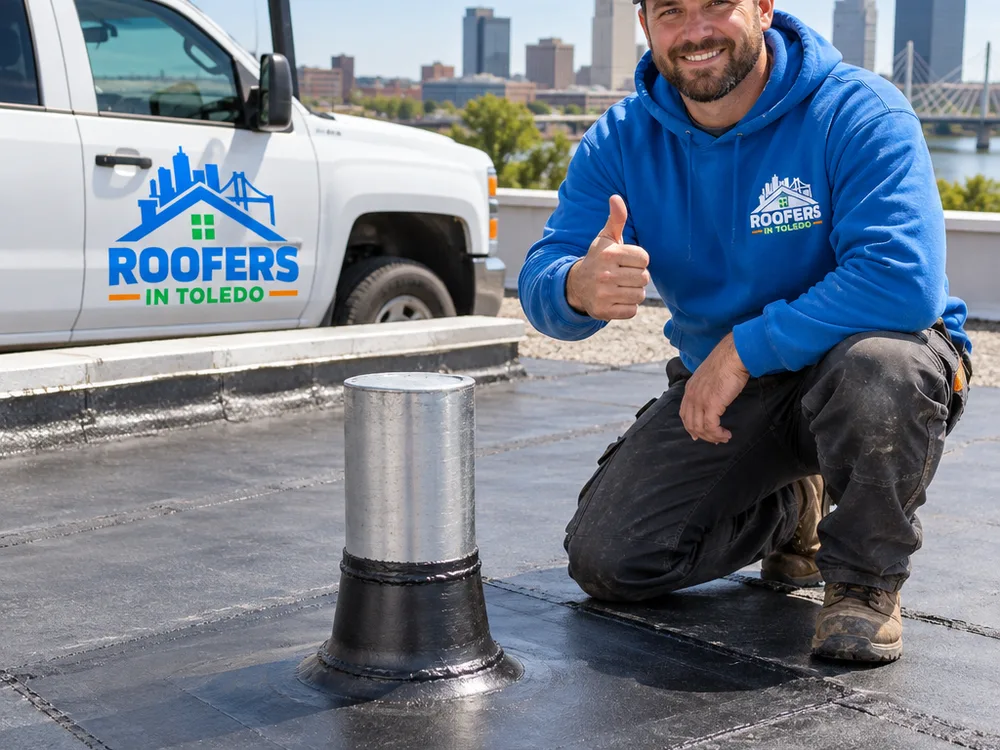
Seams, drains and penetrations
Common questions
The leak source is usually above and offset from where water shows up inside, so the contractor traces the path by checking seams, penetrations, and low areas around drains. If you can share whether the leak appears only after heavy rain, after snow melt, or after wind-driven storms, that pattern helps narrow the starting point.
Most low-slope roofs are membrane or asphalt-based systems such as EPDM rubber, TPO, PVC, modified bitumen, or built-up roofing (BUR). A contractor will identify what you have so the repair uses compatible materials and methods.
A patch can be the right choice when the problem is localized, like a split seam or a failed flashing detail. If there are widespread seam issues, surface cracking, or recurring ponding that keeps stressing the roof, a contractor may discuss a broader repair plan or a coating system that fits the existing roof.
Ponding usually comes from low spots, clogged drains, settled insulation or deck areas, or roof details that trap water. The contractor may look at drain function, slope, and whether the roof structure or insulation profile is allowing water to sit after rain.
Move items away from the leak, put a container under drips, and take photos of the interior stain and the exterior area if you can do so safely. Avoid going onto the roof in wet, icy, or windy conditions; the contractor can diagnose the roof safely with the right access and equipment.
Have the address, building type, how long the leak has been happening, and any recent changes (new equipment, tree work, a storm event, or foot traffic). If you know the roof material or the last time it was worked on, share that too, and we'll connect you with a local contractor who fits the job.
Yes. If the contractor finds the roof needs more than a repair, you can talk through options and decide what to do next, and many homeowners also compare broader roofing needs in Toledo alongside repair.
One call starts the inspection conversation
Call and describe the flat roof problem once. We'll connect you with a local Toledo-area contractor who can inspect the seams, drains, flashing, and surface and walk you through the repair options.
CALL NOW: (567) 666-7617Roofers in Toledo serves Toledo, Ohio and surrounding communities within roughly a 10-mile radius, including Sylvania, Maumee, Ottawa Hills, Oregon, Perrysburg, and Rossford.