Leak investigation and targeted repairs
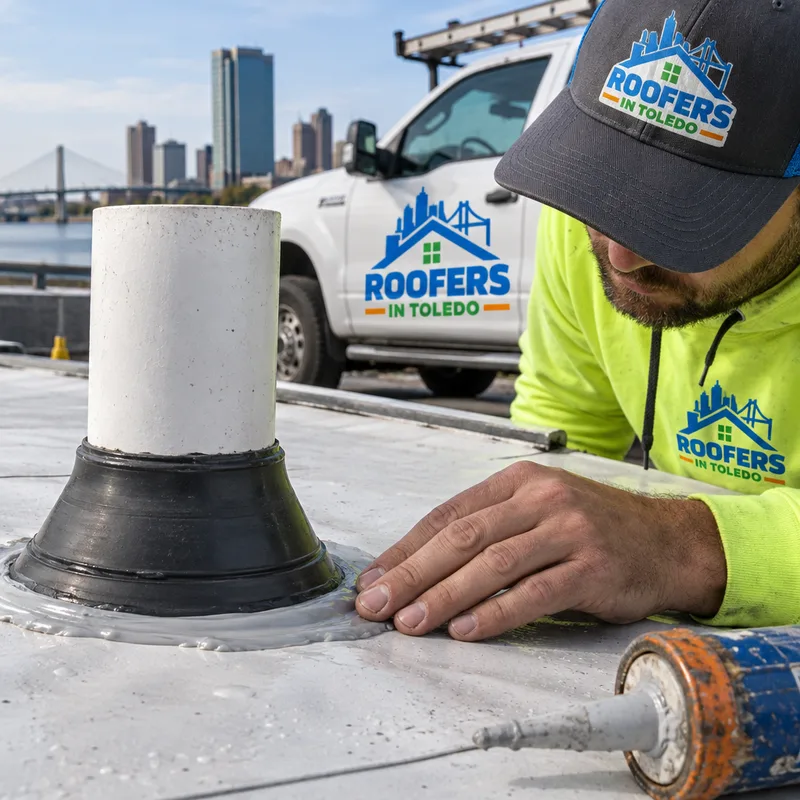
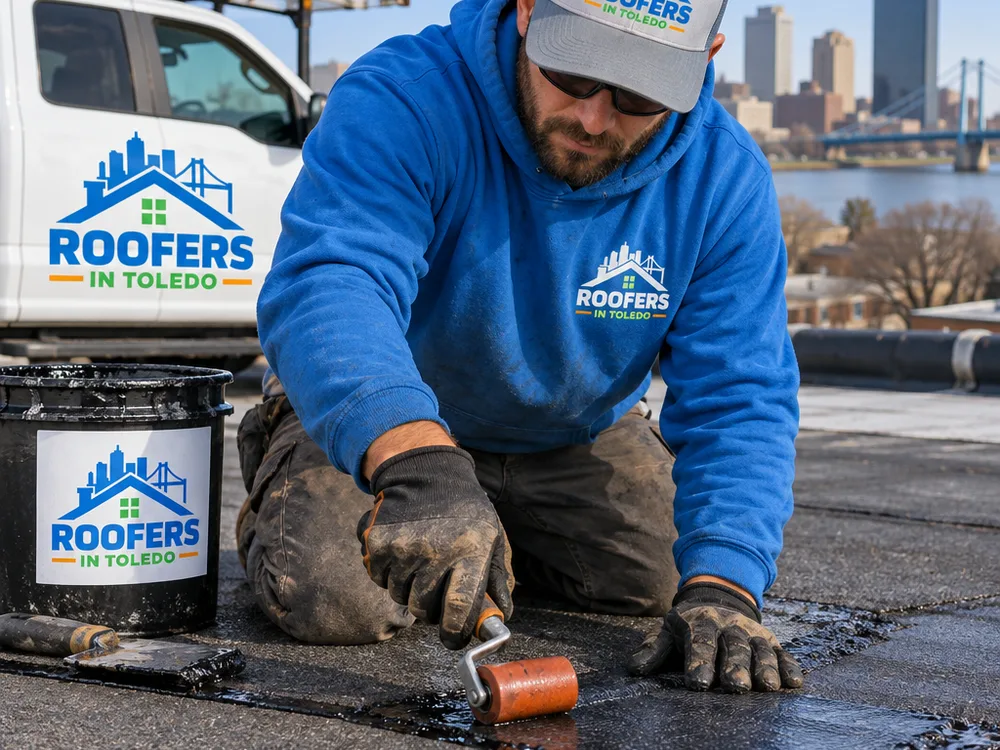
Tracing water entry at seams, flashing, parapet caps, roof-to-wall transitions, skylights, and rooftop equipment curbs, then repairing with the correct method for the roof system.
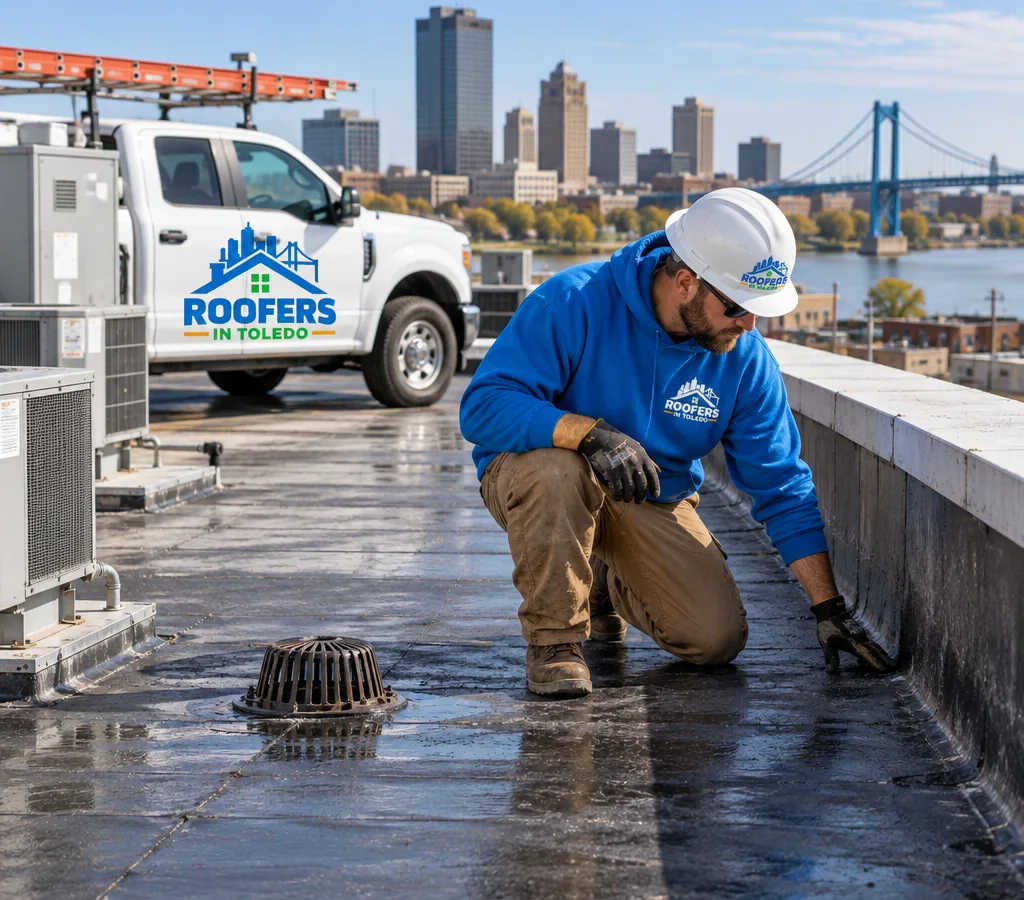
Commercial roofing in Toledo, Ohio
Describe the roof issue once and we'll connect you with a local commercial roofing contractor who works on buildings like yours.
CALL NOW: (567) 666-7617Start with the roof system
A commercial roof problem rarely starts with the spot where you see water. The contractor you speak with will usually begin by narrowing down the roof type and how the building sheds water, then work outward from there.
For commercial roofing in Toledo, most calls center on flat or low-slope systems where drainage, seams, and penetrations do the most work. Expect questions like:
A thorough roof visit often includes a walk of the field membrane, edge metal, flashing details at penetrations, and a look at the deck condition where accessible. If the building has a history of recurring leaks, the contractor may recommend a moisture survey—using methods such as infrared scanning or test cuts—to find wet insulation that a surface patch will not solve.
If you are trying to reach the right person for the job, Roofers in Toledo is a referral service. One phone call is enough to describe the building, what you are seeing, and what access is like. We connect you with a local contractor who handles commercial roof maintenance, repairs, restoration, or replacement, and you deal with that contractor directly for next steps.
For broader residential and commercial roof topics in the area, roofing in Toledo can help you compare common roof systems and situations without guessing what to ask.
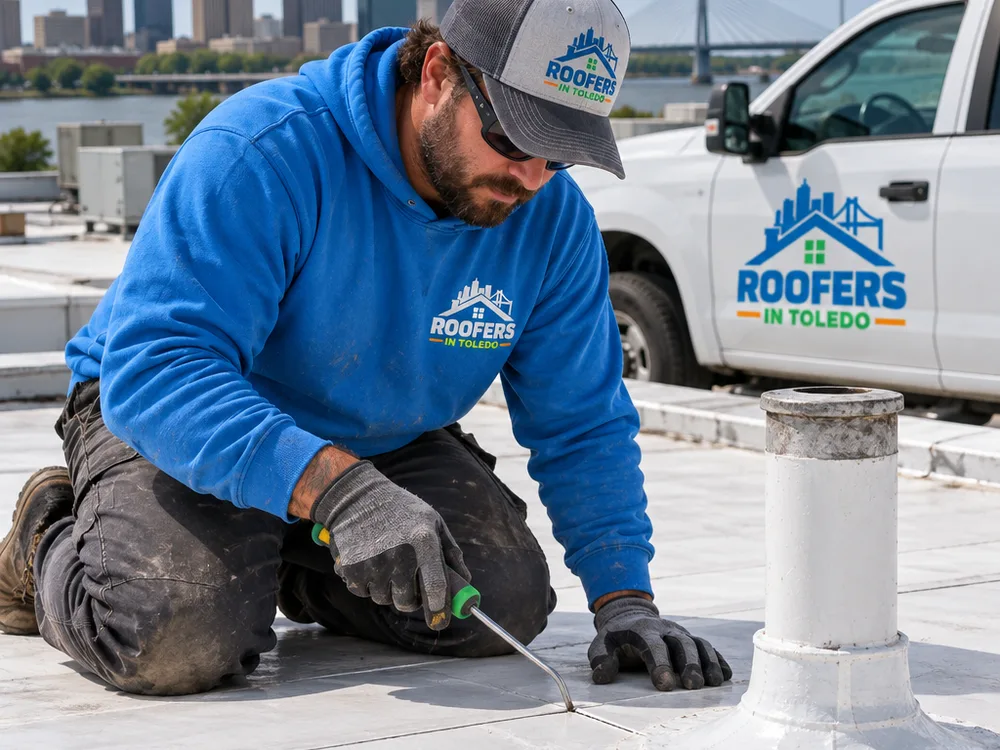
Commercial roof services
Tracing water entry at seams, flashing, parapet caps, roof-to-wall transitions, skylights, and rooftop equipment curbs, then repairing with the correct method for the roof system.
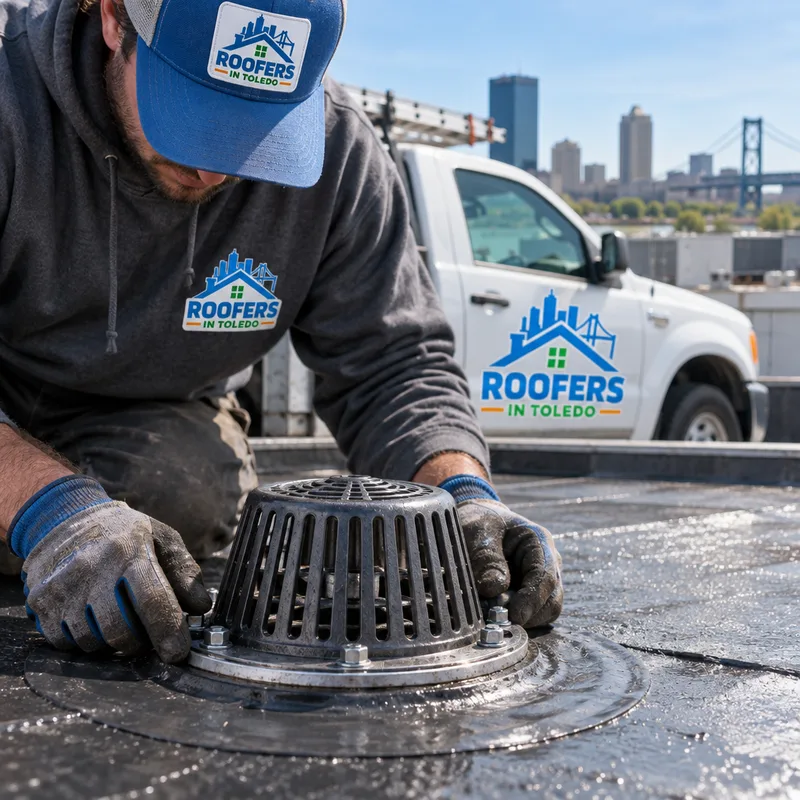
Cleaning and checking drains and scuppers, resealing aging details, correcting small punctures, and documenting conditions before they turn into interior damage.
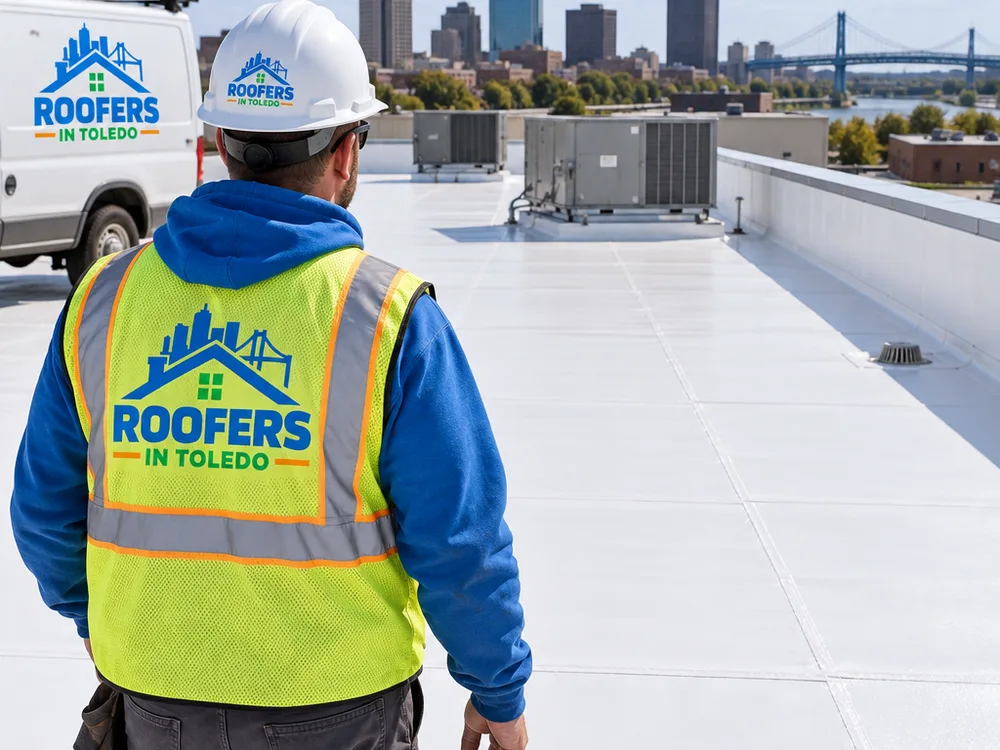
When a roof is worn but structurally sound, contractors may propose reinforcement at seams and penetrations plus a compatible coating system.
Tear-off or recover options depend on the deck, moisture in the insulation, code requirements, and how many roof layers are already present.
Diagnosing wind-lifted edge metal, displaced ballast, debris punctures, and damage around rooftop units after major weather swings.
The referral process
Share the building type, roof type if you know it, where the issue shows up, and whether there is a safe way to access the roof.
We connect you with an independent commercial roofer who works in Toledo, Ohio and the surrounding area.
You and the contractor talk through what they want to inspect, what repair or restoration paths make sense, and what timing works for your business.
If the scope and terms work for you, you move forward with the contractor. If not, you are not committed to anything by making the call.
Roof work and material details
Common questions
The most helpful details are the building type, approximate roof size, roof material if you know it, and where the problem shows up inside. If you can also note whether the roof has internal drains or scuppers, and whether any rooftop units or recent work are near the leak area, the contractor can narrow the likely causes faster.
A repair makes sense when the issue is localized and the surrounding membrane and insulation are still sound, while restoration is usually discussed when the roof surface is aging across larger areas but the system can still be stabilized. A full replacement is more likely when there is widespread wet insulation, repeated failures at many details, or the roof assembly is at the end of its service life. The contractor will confirm this by checking seams, flashings, and moisture conditions.
Common sources include failed seams, punctures from foot traffic, cracks at flashing transitions, roof drains that back up, and leaking penetrations such as pipes and conduit. On some buildings, parapet walls and edge metal are the weak point because wind and temperature swings stress those terminations.
In most cases, yes, because diagnosing commercial leaks requires seeing the membrane, flashings, and drainage conditions up close. When you talk to the contractor, mention how roof access works—interior hatch, ladder access, or controlled access—and any on-site requirements such as sign-in procedures or restricted areas so they can plan the visit appropriately.
Many repair and restoration tasks can be staged so the building remains in use, especially when work is concentrated on the roof surface and exterior details. The contractor will explain any impacts such as temporary access limitations, noise near rooftop units, and whether certain adhesives or coatings require ventilation planning around intakes.
Many commercial roofers work across multiple systems, but the best match depends on what is already on the building and what the current failure mode is. When you call, describe the roof type if you know it—or share what you can about the surface and seams—and we will connect you with a contractor used to that category of roof.
One call starts the conversation
Call Roofers in Toledo, describe the building and what you're seeing once, and we'll connect you with a local commercial roofing contractor in Toledo, Ohio who can take it from there.
CALL NOW: (567) 666-7617Roofers in Toledo serves Toledo, Ohio and surrounding communities within roughly a 10-mile radius, including Sylvania, Maumee, Ottawa Hills, Oregon, Perrysburg, and Rossford.